
AI + Biomarkers: A New Standard in Cancer Detection
The future of cancer detection lies in combining artificial intelligence with biomarker diagnostics. Discover how this dual-approach is enabling smarter, faster, and more precise healthcare decisions.
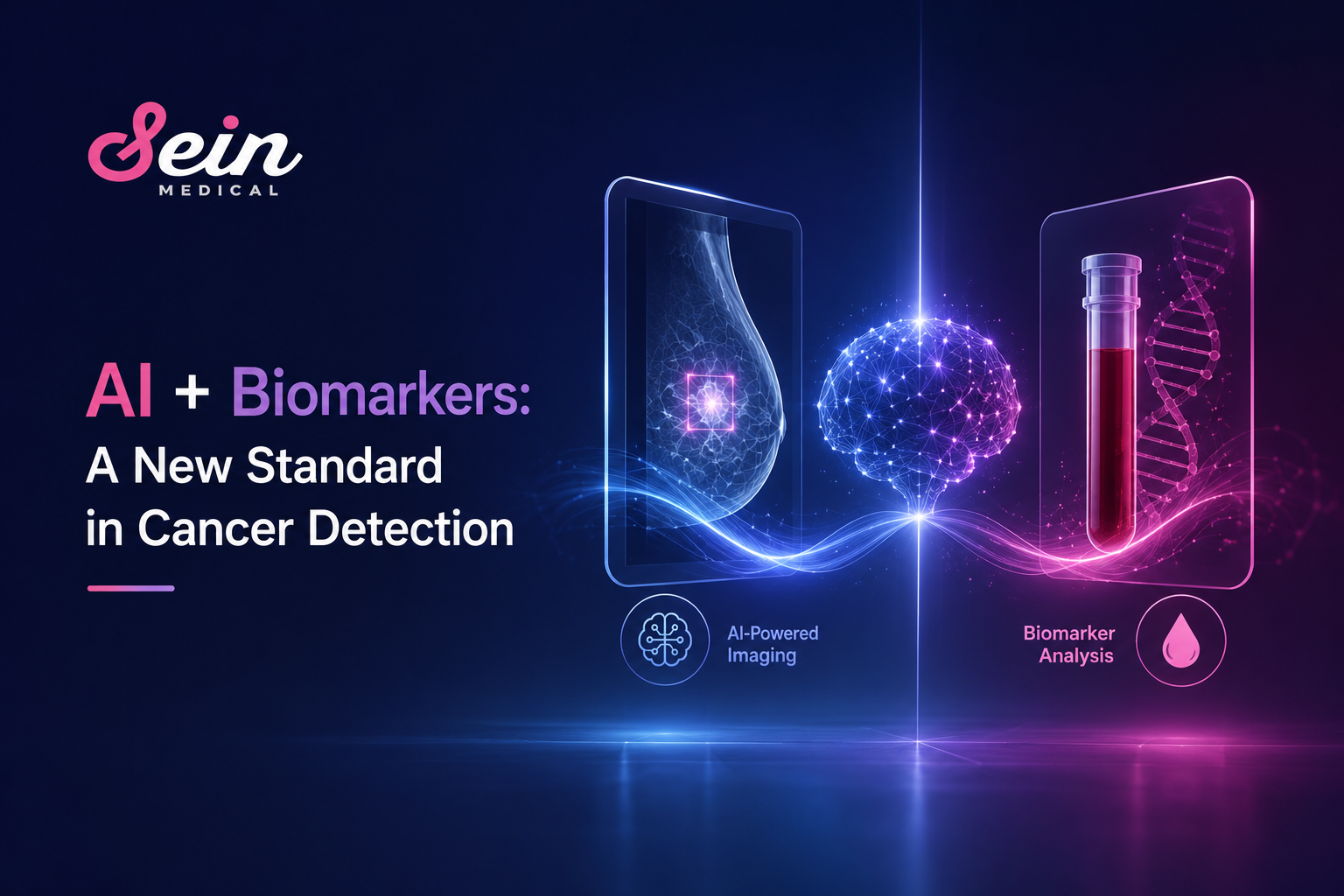
AI + Biomarkers: A New Standard in Cancer Detection
Cancer diagnostics are entering a new era.
For decades, healthcare systems relied primarily on imaging technologies and clinical interpretation to detect disease. While these approaches remain essential, the growing complexity of modern healthcare demands something more intelligent, integrated, and precise.
Today, one of the most promising developments in healthcare innovation is the combination of artificial intelligence and biomarker diagnostics.
Individually, both technologies have already demonstrated significant potential.
Together, they may redefine the future of cancer detection.
The Limitations of Traditional Detection Models
Traditional cancer screening methods have helped improve survival rates worldwide, especially through earlier detection.
However, important challenges still remain:
- False positives
- Missed abnormalities
- Diagnostic variability
- Delayed interpretation
- Limited personalization
Most conventional systems rely heavily on imaging findings alone.
But cancer is not only a visual condition. It is also a biological process that often begins long before structural abnormalities become clearly visible on scans.
This creates a critical opportunity for more advanced diagnostic approaches.
Why AI Matters in Modern Diagnostics
Artificial intelligence has rapidly become one of the most transformative tools in healthcare imaging.
Using deep learning models trained on large medical datasets, AI systems can analyze complex imaging patterns with increasing speed and precision.
In cancer detection, AI can help:
- Identify subtle abnormalities
- Improve image interpretation consistency
- Prioritize high-risk cases
- Reduce diagnostic workload
- Support earlier clinical decision-making
AI is especially valuable in high-volume screening environments where radiologists must analyze thousands of images under time pressure.
Rather than replacing clinicians, AI strengthens diagnostic workflows by enhancing human expertise.
The Power of Biomarker Diagnostics
At the same time, biomarker technologies are transforming how healthcare understands disease at a biological level.
Biomarkers are measurable biological signals that may indicate the presence, progression, or risk of disease.
These markers can often be detected through:
- Blood samples
- Genetic analysis
- Protein expression patterns
- Molecular profiling
Unlike imaging alone, biomarkers provide insight into what is happening inside the body at a cellular and molecular level.
This creates opportunities for:
- Earlier biological detection
- Personalized risk assessment
- More targeted interventions
- Improved monitoring over time
Biomarker diagnostics are becoming a key foundation of precision medicine.
Why Combining AI and Biomarkers Changes Everything
Individually, imaging and biomarkers each provide valuable information.
But when combined, they create a far more comprehensive diagnostic system.
This dual-approach integrates:
- Structural imaging insights
- Biological disease indicators
- Predictive analytics
- Pattern recognition models
Together, these technologies allow healthcare systems to move beyond isolated interpretation toward integrated intelligence.
For example:
- AI may identify suspicious imaging regions
- Biomarkers may validate underlying biological activity
- Combined data may improve overall diagnostic confidence
The result is a more accurate and personalized understanding of patient risk.
Moving Beyond Reactive Healthcare
Traditional healthcare systems often operate reactively—responding after visible disease progression occurs.
The integration of AI and biomarkers supports a more proactive model.
This shift enables healthcare providers to:
- Detect risk patterns earlier
- Identify subtle changes sooner
- Improve preventive screening strategies
- Support more personalized patient pathways
Instead of waiting for advanced abnormalities to appear, healthcare systems can increasingly focus on prediction, early intervention, and continuous monitoring.
This represents a major evolution in modern diagnostics.
Building Smarter Clinical Workflows
Another important advantage of combining AI with biomarker analysis is workflow efficiency.
Modern healthcare providers face growing demands, increasing imaging volumes, and limited specialist resources.
Integrated diagnostic systems can help:
- Reduce repetitive manual analysis
- Prioritize higher-risk patients
- Support faster reporting
- Improve scalability across healthcare systems
This not only improves operational performance but also enhances patient experience through faster and more informed clinical decisions.
Challenges and Considerations
Despite the excitement surrounding AI and biomarkers, important challenges remain.
Healthcare systems must address:
- Clinical validation requirements
- Data privacy and security
- Regulatory approval standards
- Bias in training datasets
- Integration into clinical workflows
Trust and transparency are critical in medical AI development.
Technology alone is not enough. Successful adoption depends on collaboration between clinicians, researchers, engineers, and healthcare institutions.
The Future of Precision Cancer Detection
The future of cancer diagnostics is moving toward systems that are:
- Smarter
- More predictive
- More personalized
- More data-driven
The combination of AI and biomarkers represents more than a technological trend.
It represents a new philosophy of healthcare—one focused on integrating multiple layers of intelligence to support earlier, more confident, and more patient-centered decisions.
This is the direction modern diagnostics is heading.
And it is rapidly becoming the new standard.
Final Thoughts
Cancer detection is no longer limited to what clinicians can visually identify alone.
By combining artificial intelligence with biomarker diagnostics, healthcare systems are gaining deeper insight into disease biology, improving diagnostic precision, and moving closer toward truly personalized medicine.
The future of diagnostics will not depend on a single technology.
It will depend on how intelligently technologies work together to improve patient outcomes.