
The Hidden Challenges in Breast Cancer Screening Today
Breast cancer screening has advanced significantly, yet critical challenges like false positives, delayed diagnoses, and limited access continue to impact patient outcomes. Here’s what the healthcare system still needs to solve.
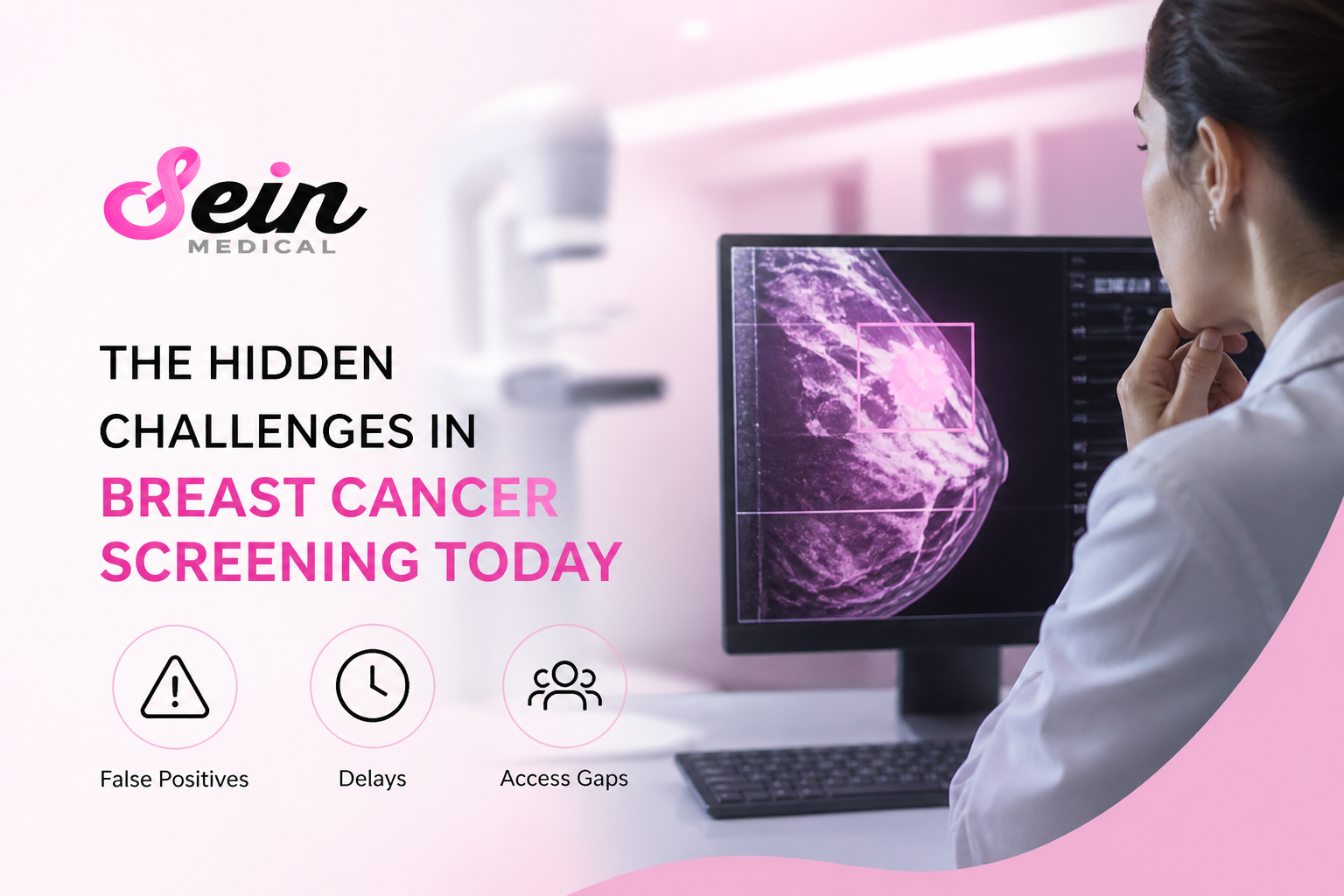
The Hidden Challenges in Breast Cancer Screening Today
Breast cancer screening has come a long way over the past decade. With the widespread adoption of digital mammography and growing awareness around early detection, millions of lives have been improved—and many saved.
Yet, beneath this progress lies a more complex reality.
Today’s screening systems still face critical limitations that affect not only clinical accuracy but also patient experience, healthcare efficiency, and long-term outcomes.
Understanding these challenges is the first step toward building better solutions.
The Problem of False Positives and Overdiagnosis
One of the most persistent issues in breast cancer screening is the rate of false positives.
In many cases, screening tests identify abnormalities that appear suspicious but are ultimately non-cancerous. While this may seem like a cautious approach, the consequences are significant.
Patients often undergo:
- Unnecessary biopsies
- Additional imaging procedures
- Emotional stress and anxiety
Even more concerning is the phenomenon of overdiagnosis, where conditions are detected that may never progress into life-threatening disease. This can lead to overtreatment—exposing patients to interventions they may not actually need.
Accuracy in screening is not just a technical goal. It is a human necessity.
Delays That Cost More Than Time
Another critical challenge is delayed diagnosis.
In many healthcare systems, high demand and limited resources result in long wait times for:
- Imaging appointments
- Diagnostic follow-ups
- Biopsy results
These delays create uncertainty for patients and can significantly impact clinical outcomes. In diseases like breast cancer, where early intervention is key, time is not just a metric—it is a determinant of survival.
Reducing diagnostic delays is essential for improving both patient confidence and treatment effectiveness.
Unequal Access to Screening Services
Access to quality screening is not evenly distributed.
Patients in rural or underserved regions often face:
- Limited availability of imaging centers
- Longer travel distances
- Reduced frequency of screening
This disparity leads to later-stage diagnoses and lower survival rates compared to urban populations.
At the same time, even in well-equipped centers, clinicians are increasingly overwhelmed by the growing volume of imaging data, making consistent and timely analysis more difficult.
Healthcare innovation must address not only accuracy—but accessibility.
The Data Overload Challenge
Modern diagnostic systems generate vast amounts of data.
Radiologists are required to interpret thousands of images, often under time pressure. This creates a risk of:
- Missed abnormalities
- Inconsistent interpretations
- Cognitive fatigue
As screening volumes continue to rise, relying solely on manual analysis becomes less sustainable.
The question is no longer whether we need better tools—but how quickly we can integrate them into everyday clinical workflows.
Rethinking the Future of Screening
These challenges point to a clear conclusion:
Breast cancer screening is not just about detecting disease—it is about doing it accurately, efficiently, and equitably.
To move forward, the healthcare industry must adopt solutions that:
- Reduce false positives and unnecessary procedures
- Accelerate diagnostic timelines
- Improve access across all populations
- Support clinicians with intelligent decision-making tools
This is where the next generation of healthcare technology begins to make a difference.
A Shift Toward Smarter Diagnostics
Emerging approaches that combine artificial intelligence with biological insights, such as biomarker analysis, are redefining what screening can achieve.
Instead of relying on a single data source, these systems integrate multiple layers of information to deliver:
- More precise detection
- Personalized risk assessment
- Better clinical decision support
The result is not just improved performance—but a fundamentally better screening experience for both patients and providers.
Final Thoughts
Behind every screening result is a person waiting for clarity, reassurance, and the right next step.
Solving the hidden challenges in breast cancer screening is not just a technical mission—it is a responsibility.
As healthcare continues to evolve, the focus must remain clear: better decisions, earlier detection, and outcomes that truly matter.