
How Deep Learning is Transforming Mammography Analysis
Deep learning is reshaping mammography analysis by improving pattern recognition, enhancing image interpretation, and supporting earlier breast cancer detection. Discover how AI-driven imaging is transforming modern diagnostics.
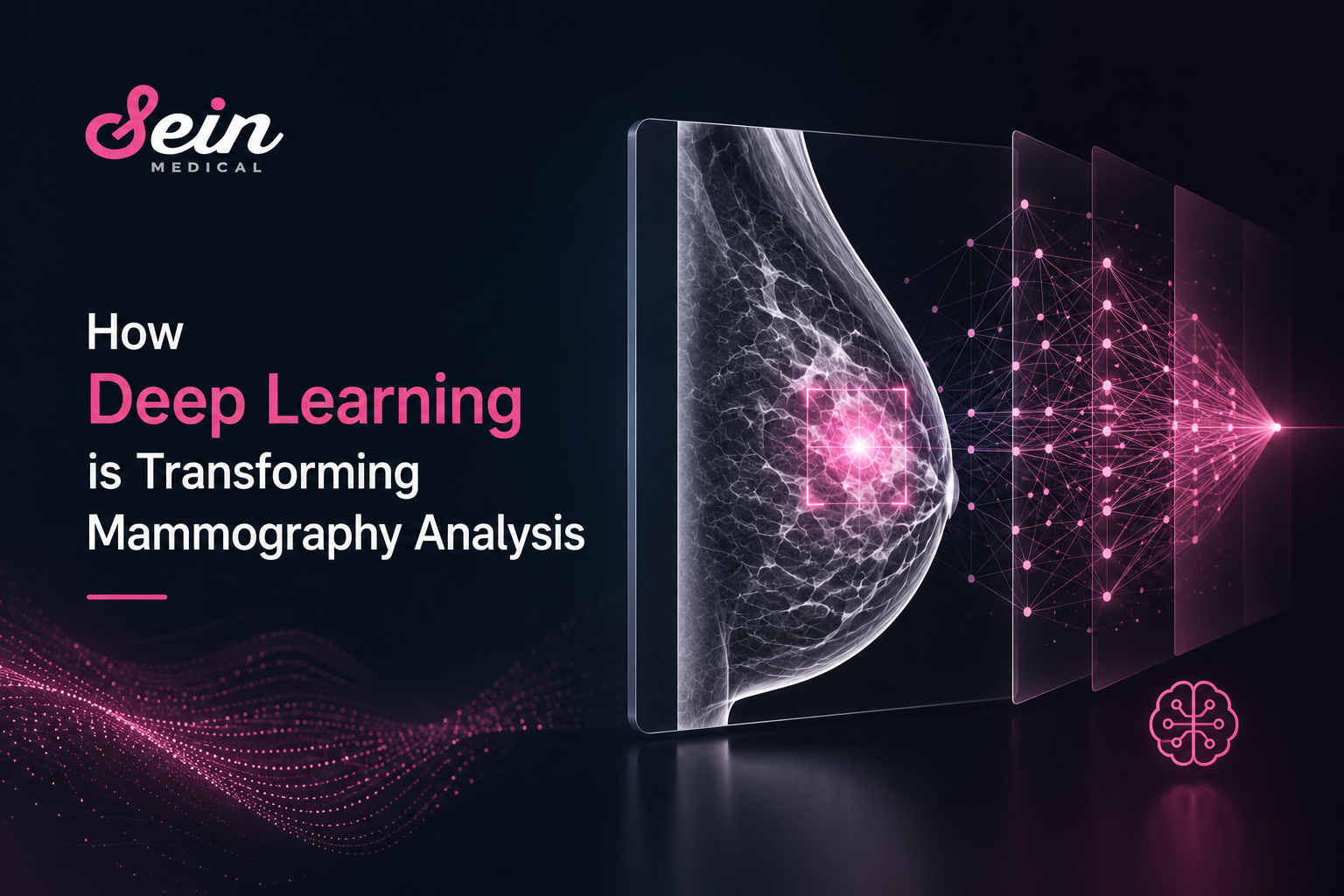
How Deep Learning is Transforming Mammography Analysis
Medical imaging has always played a critical role in breast cancer detection.
For decades, mammography has helped clinicians identify suspicious abnormalities and improve early diagnosis. But as imaging volumes continue to grow and diagnostic complexity increases, traditional workflows are facing new limitations.
Today, healthcare is entering a new phase—one where artificial intelligence and deep learning are transforming how mammograms are analyzed.
What once depended entirely on manual interpretation is now being enhanced by systems capable of learning from millions of imaging patterns.
And the impact is becoming impossible to ignore.
Understanding Deep Learning in Healthcare
Deep learning is a branch of artificial intelligence designed to recognize patterns within large datasets.
Unlike traditional software, which follows fixed instructions, deep learning models improve over time by learning directly from examples.
In healthcare imaging, these systems are trained using thousands—or even millions—of annotated medical images.
This allows them to identify subtle visual patterns that may be difficult for the human eye to detect consistently.
In mammography analysis, deep learning models are increasingly being used to support:
- Lesion detection
- Pattern recognition
- Risk classification
- Image prioritization
- Diagnostic workflow optimization
The result is a smarter and more scalable approach to medical imaging.
Why Mammography Analysis Is Challenging
Mammography interpretation is one of the most demanding areas of diagnostic imaging.
Radiologists must carefully evaluate complex tissue structures while identifying abnormalities that are often extremely subtle.
Several factors increase this complexity:
- Dense breast tissue
- Variability between patients
- Image quality differences
- High screening volumes
- Fatigue from repetitive analysis
Even experienced specialists may interpret the same image differently under certain conditions.
This variability highlights the growing need for technologies that improve consistency and support clinical confidence.
How Deep Learning Improves Pattern Recognition
One of the greatest strengths of deep learning is its ability to recognize highly complex imaging patterns.
Instead of analyzing isolated features alone, deep learning models evaluate relationships across the entire image.
These systems can detect:
- Microcalcifications
- Tissue distortions
- Mass irregularities
- Subtle density changes
- Early suspicious patterns
As models continue to train on larger mammogram datasets, their ability to identify clinically relevant features becomes increasingly refined.
Importantly, this process happens at a scale and speed that would be difficult to achieve manually.
Supporting Radiologists, Not Replacing Them
A common misconception about AI in healthcare is that it aims to replace clinicians.
In reality, the goal is very different.
Deep learning systems are designed to function as decision-support tools that enhance radiologist performance and reduce diagnostic burden.
These systems can help by:
- Highlighting high-risk regions in images
- Prioritizing suspicious cases
- Reducing repetitive review tasks
- Improving workflow efficiency
- Supporting faster interpretation
This allows clinicians to focus more on complex decision-making and patient-centered care.
The strongest diagnostic outcomes still come from the combination of human expertise and intelligent technology.
Improving Diagnostic Accuracy
Accuracy remains one of the most important goals in breast cancer screening.
False positives can lead to unnecessary biopsies and emotional distress, while missed abnormalities may delay critical treatment.
Deep learning has shown strong potential to improve diagnostic performance by helping reduce:
- Interpretation variability
- Missed findings
- Screening inefficiencies
By learning from large and diverse datasets, AI systems can identify patterns associated with malignancy more consistently across different patient populations.
This creates opportunities for more reliable and scalable screening programs.
The Importance of Data Quality
Deep learning systems are only as effective as the data used to train them.
High-quality mammogram datasets are essential for building accurate and clinically useful AI models.
Effective training datasets typically require:
- Large imaging volumes
- Diverse patient demographics
- Expert clinical annotations
- High-quality image labeling
The broader and more representative the dataset, the stronger the model’s ability to generalize across real-world clinical environments.
This is why collaboration between healthcare providers, researchers, and AI teams is becoming increasingly important.
Moving Toward Smarter Screening Systems
The future of mammography analysis is not limited to image interpretation alone.
Modern healthcare systems are beginning to integrate:
- Deep learning algorithms
- Biomarker analysis
- Predictive analytics
- Personalized risk assessment
This creates a more comprehensive diagnostic ecosystem capable of supporting earlier and more precise interventions.
Rather than reacting only after visible abnormalities appear, future systems may help identify elevated risk patterns before disease progression becomes advanced.
The shift is moving from reactive screening toward proactive intelligence.
Challenges Still Remain
Despite rapid progress, deep learning in healthcare also presents important challenges.
These include:
- Data privacy concerns
- Regulatory approval processes
- Model transparency
- Clinical validation
- Integration into hospital workflows
Healthcare AI must remain clinically responsible, ethically designed, and carefully validated before widespread adoption.
Trust is essential in medical decision-making.
Final Thoughts
Deep learning is redefining the future of mammography analysis.
By improving pattern recognition, supporting radiologists, and enabling more intelligent diagnostic workflows, AI is helping healthcare systems move toward faster, more accurate, and more scalable breast cancer screening.
But the real value of this technology goes beyond automation.
Its true potential lies in helping clinicians make better decisions—and helping patients receive earlier, more confident care.