Inside a Smart Screening Workflow: From Data to Diagnosis
Modern cancer screening is no longer a single-step process. Discover how smart diagnostic workflows combine imaging, AI, biomarker analysis, and clinical insights to deliver faster and more accurate healthcare decisions.
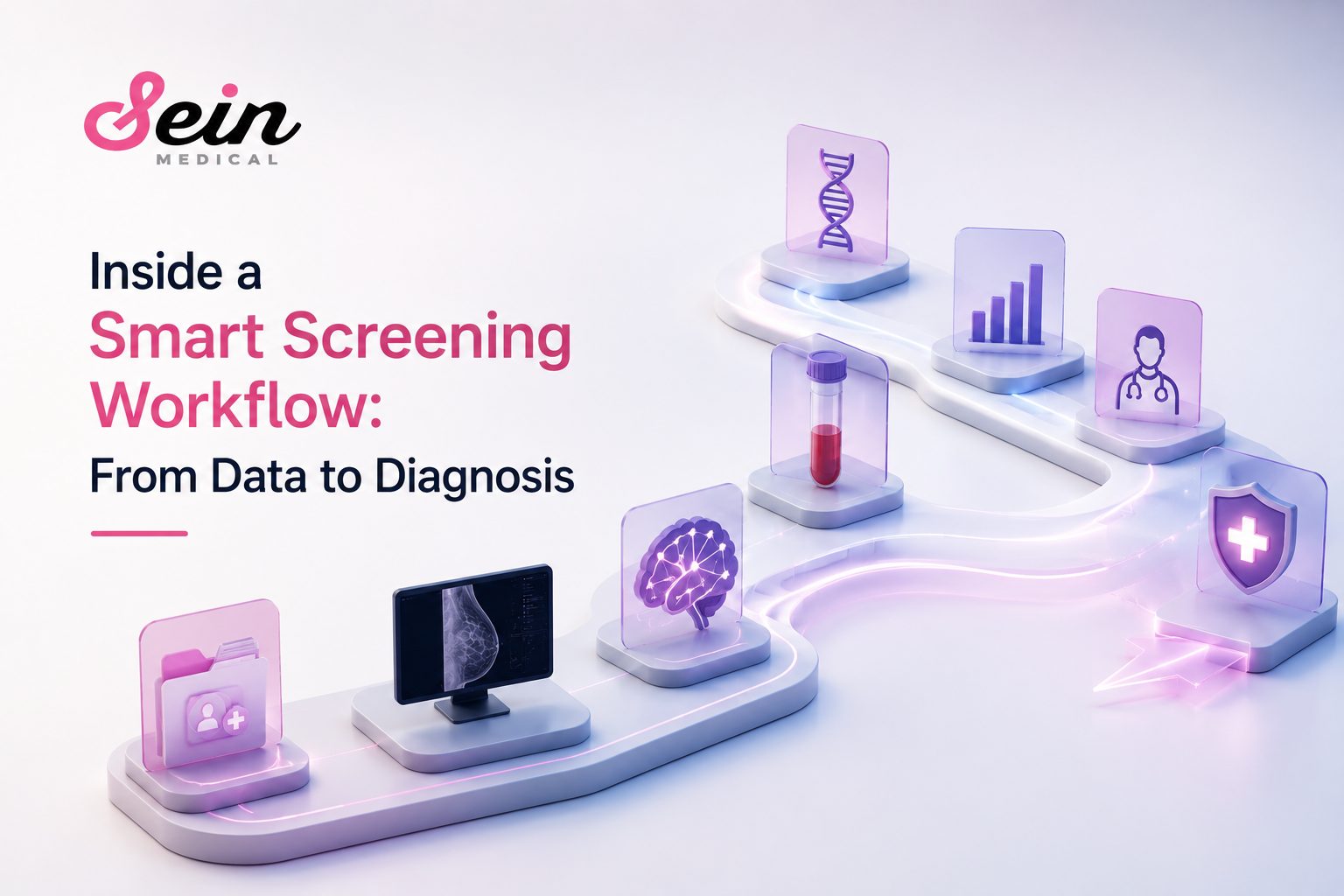
Inside a Smart Screening Workflow: From Data to Diagnosis
Healthcare diagnostics are becoming increasingly sophisticated.
Gone are the days when a single image or laboratory result was enough to guide complex clinical decisions. Today, the future of cancer detection depends on integrating multiple sources of information into a seamless and intelligent workflow.
Artificial intelligence, medical imaging, biomarker analysis, and clinical expertise are now working together to create smarter diagnostic pathways.
But what does this process actually look like?
Let's take a closer look inside a modern screening workflow and explore how data becomes diagnosis.
Why Traditional Screening Workflows Are Evolving
Traditional screening systems have delivered tremendous value for decades.
However, healthcare providers continue to face challenges such as:
- Increasing patient volumes
- Diagnostic delays
- Interpretation variability
- Growing data complexity
- Limited specialist resources
As medical data continues to expand, healthcare systems require tools that can process information more efficiently while maintaining high levels of accuracy.
This is where smart screening workflows begin to make a difference.
Step 1: Patient Data Collection
Every diagnostic journey starts with data.
This may include:
- Patient demographics
- Family history
- Previous medical records
- Clinical risk factors
- Current symptoms
These data points provide important context for understanding an individual's health profile.
Rather than viewing each patient through a generalized lens, modern systems begin by building a personalized baseline.
Step 2: Medical Imaging Acquisition
The next stage involves diagnostic imaging.
Depending on the screening program, this may include:
- Mammography
- Ultrasound
- MRI
- CT imaging
Medical images provide a visual representation of tissue structures and potential abnormalities.
However, imaging alone often represents only one piece of the diagnostic puzzle.
Step 3: AI-Powered Image Analysis
Once images are acquired, artificial intelligence systems can assist with analysis.
Deep learning algorithms evaluate imaging data to identify patterns that may indicate abnormalities.
AI can help:
- Highlight suspicious regions
- Detect subtle tissue changes
- Prioritize higher-risk cases
- Reduce interpretation variability
This stage enhances efficiency while supporting clinical decision-making.
Importantly, AI acts as a support tool rather than a replacement for healthcare professionals.
Step 4: Biomarker Sample Collection
While imaging reveals structural information, biomarkers provide biological insight.
Samples may be collected through:
- Blood testing
- Molecular assays
- Genetic analysis
- Protein profiling
Biomarkers can reveal disease-related signals that may not yet be visible through imaging alone.
This additional layer of information helps create a more complete picture of patient health.
Step 5: Biomarker Analysis
Collected samples are then analyzed for relevant biological indicators.
Depending on the clinical application, biomarker panels may help identify:
- Disease-associated proteins
- Genetic variations
- Cellular activity patterns
- Risk-related biological changes
This stage introduces valuable molecular intelligence into the diagnostic workflow.
Step 6: Data Integration
One of the most important advances in modern diagnostics is the ability to integrate multiple data sources.
Rather than evaluating imaging and biomarkers separately, smart workflows combine:
- Imaging findings
- Biomarker results
- Patient history
- Clinical information
This creates a unified dataset capable of supporting more informed decision-making.
Data integration transforms isolated observations into actionable clinical insight.
Step 7: Risk Assessment and Predictive Modeling
Advanced analytics and AI models can then evaluate the integrated data.
At this stage, systems may help:
- Estimate patient risk levels
- Identify high-priority cases
- Detect hidden patterns
- Support early intervention strategies
Predictive analysis shifts healthcare from reactive diagnosis toward proactive care.
The goal is not only to identify disease but also to understand the likelihood of disease development and progression.
Step 8: Clinical Review and Validation
Technology plays a critical role, but human expertise remains essential.
Radiologists, pathologists, and clinicians review findings generated throughout the workflow.
This stage ensures:
- Clinical accuracy
- Contextual interpretation
- Regulatory compliance
- Patient-centered decision-making
Successful diagnostics rely on collaboration between intelligent systems and healthcare professionals.
Step 9: Actionable Diagnostic Results
The final stage is delivering meaningful results.
By combining imaging insights, biomarker intelligence, AI analysis, and clinical expertise, healthcare providers can generate more comprehensive diagnostic assessments.
These results may support:
- Earlier detection
- More accurate diagnosis
- Personalized treatment planning
- Ongoing patient monitoring
The ultimate goal is to provide clinicians with clearer information and patients with greater confidence.
Why This Approach Matters
A smart screening workflow is more than a technological upgrade.
It represents a shift in how healthcare approaches disease detection.
Instead of relying on isolated tests, modern systems combine multiple layers of evidence to create a more complete understanding of patient health.
This approach offers several potential benefits:
- Improved diagnostic accuracy
- Faster clinical workflows
- Reduced uncertainty
- Better resource allocation
- More personalized care
As healthcare becomes increasingly data-driven, integrated workflows will play a central role in improving outcomes.
The Future of Diagnostic Intelligence
The future of screening is not built on a single technology.
It is built on collaboration between:
- Artificial intelligence
- Medical imaging
- Biomarker diagnostics
- Clinical expertise
Together, these capabilities create a smarter path from data to diagnosis.
As healthcare systems continue to evolve, integrated workflows will become increasingly important for delivering faster, more accurate, and more personalized care.
Final Thoughts
Every diagnosis begins with data, but meaningful healthcare decisions require much more than information alone.
By combining imaging, biomarkers, AI, and clinical expertise into a unified workflow, healthcare providers can move closer to earlier detection, greater precision, and better patient outcomes.
The future of diagnostics is not just about collecting data.
It is about transforming data into actionable insight.